A blocked toilet is stressful, and it is also very common. The good news is that you can clear many blockages at home. This guide covers each method, from the simplest to the most effective. You will also learn when to stop, because some blockages need an engineer.
Before You Start: Stop Flushing
The most important step is to stop flushing. If the bowl is full or near the rim, another flush will spill onto the floor, since the water has nowhere to go. Check what you are dealing with before you do anything else.
If the toilet is overflowing, or sewage is on the floor, skip the DIY steps. Call an emergency drainage company instead. This points to a blockage in the main drain and not only the toilet, because the problem lies beyond the bowl. DIY will make it worse.
Method 1: The Plunger
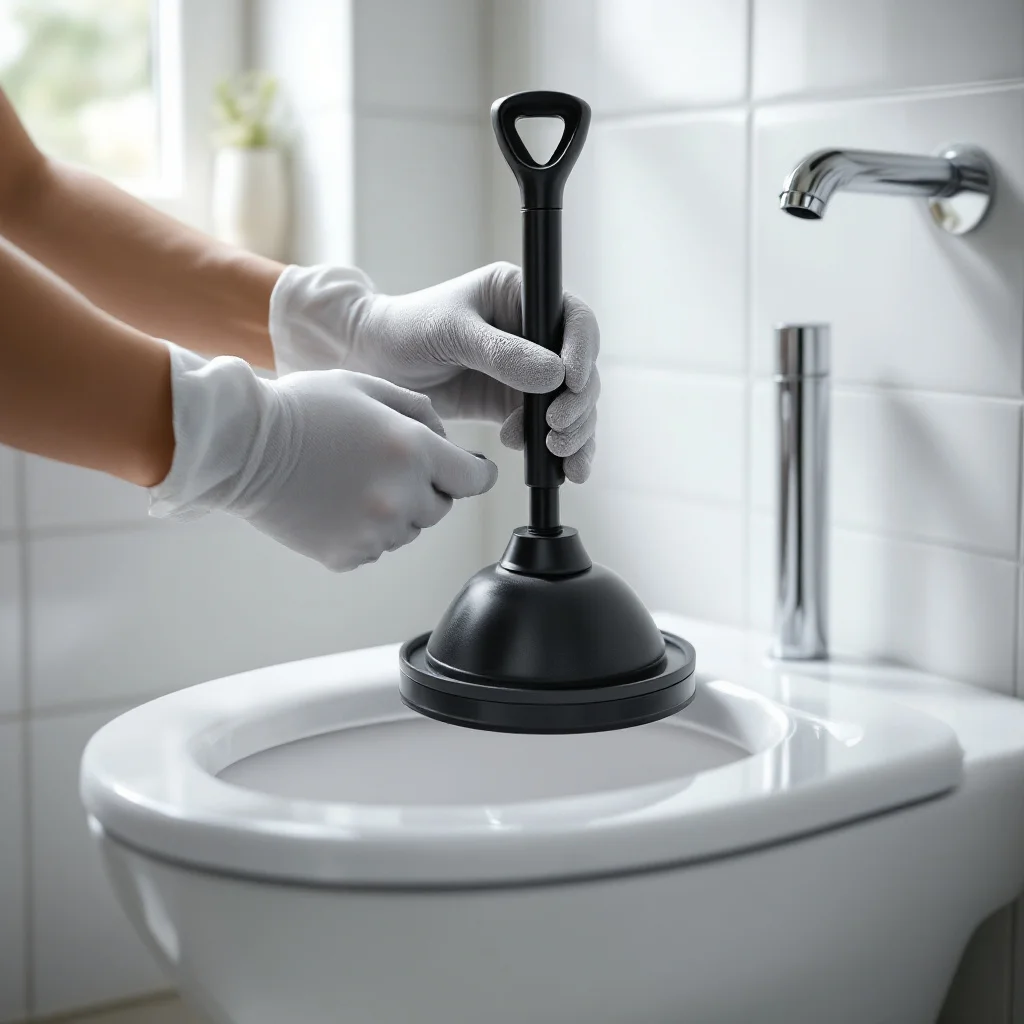
A flange plunger is the best DIY tool for a toilet. It has a rubber flap that fits the outlet. A flat sink plunger will not seal well because its cup is the wrong shape.
- Cover the plunger cup fully with water to make a seal
- Push down slowly and firmly, then pull back sharply
- Repeat 10 to 15 times without breaking the seal
- Flush once the water level starts to drop
Washing-up liquid can help because it loosens the blockage. Warm water works better than cold. Do not use boiling water, since it can crack the china.
Method 2: Hot Water and Washing-Up Liquid
If you do not own a plunger, try this for soft blockages. It suits toilet paper and other soft matter, and it works while the blockage is still soft.
- Add three good squirts of washing-up liquid to the bowl
- Pour in about a litre of hot water from waist height, but not boiling
- Wait half an hour for the soap to work into the blockage
- Test with a slow flush
This will not shift a solid object. If nothing changes, however, move on to the next method. Do not repeat it more than twice.
Method 3: Bicarbonate of Soda and Vinegar
- Pour one cup of bicarbonate of soda into the bowl
- Follow with two cups of white vinegar
- Leave the fizzing to work for half an hour
- Add hot water and flush with care
This can help with partial blockages and early build-up. Yet it will not move a solid object. Try the auger next if nothing changes.
Method 4: Toilet Auger
A toilet auger is a flexible cable with a corkscrew tip. It is also called a closet auger. A sleeve protects the china from scratches.
Feed the cable into the bowl until you feel resistance. Turn the handle clockwise while you push gently. Then pull the cable out slowly. This is the best DIY choice if you think a solid object is stuck, for example a wet wipe or a toy.
What Causes Toilet Blockages?
Knowing the cause helps you pick the right method, because each one suits a different blockage. Here are the common causes:
- Wet wipes, including ones labelled flushable: the most common cause
- Too much toilet paper, especially with a low-flow cistern
- Foreign objects such as toys, cotton pads and nappy products
- Limescale that narrows the pipe over the years
- Tree roots in the outside drain that links to the toilet
- A partial blockage in the main drain that slows the toilet
Wipes and objects often need an auger, while roots and main drain blockages need an engineer with jetting equipment. Do not push hard, because force can crack a pipe.
When to Call a Drainage Professional
Know when to stop. Call an engineer if any of these happen:
- The water level rises when you plunge
- You hear gurgling from nearby drains or the bath when you flush
- Other drains in the home are slow or backing up
- You think a solid object is stuck and will not move
- The toilet clears but blocks again within a few days
- You notice a sewage smell elsewhere in the home
These signs suggest the blockage sits in a shared drain or the main drain, because a single toilet would not cause them. That job needs high-pressure jetting and sometimes a CCTV drain survey to find the cause.
Why Toilets Block in Different Homes
Older homes often have clay pipes that run from the toilet to the main drain. Over many years, limescale can narrow them, and paper blocks more easily because the bore is smaller. A drainage engineer can restore the pipe with jetting. Pipe relining can help stop a repeat.
In a shared house, wipes are a common cause. Despite the flushable label, most wipes do not break down in water. They catch on any rough spot, since they do not dissolve.
A busy house sends many down the pipe. A simple note in the bathroom can help. If you let a shared house in Headingley, tell tenants to bin them.
Newer homes often have simpler blockages, since the pipes are smooth and wide. Too much paper in one flush is a common cause. If you live in Garforth or Rothwell, the same advice applies.
Professional Toilet Unblocking
If home methods have failed, ask a drainage company about blocked toilet help. Ask whether there is a call-out charge, because it changes the total cost. Also ask for a written quote before work starts. You can send a request to cover Leeds through the contact form, which takes requests 24/7.
While you wait for help, read our guide to the warning signs of a blocked drain. It shows what a bigger problem looks like. If you need to clear an outside drain too, see how to unblock an outside drain.
Blocked Toilet Help by Area
Each page below covers blocked drains in one area. Pick the page nearest to you, because each one covers a single place.